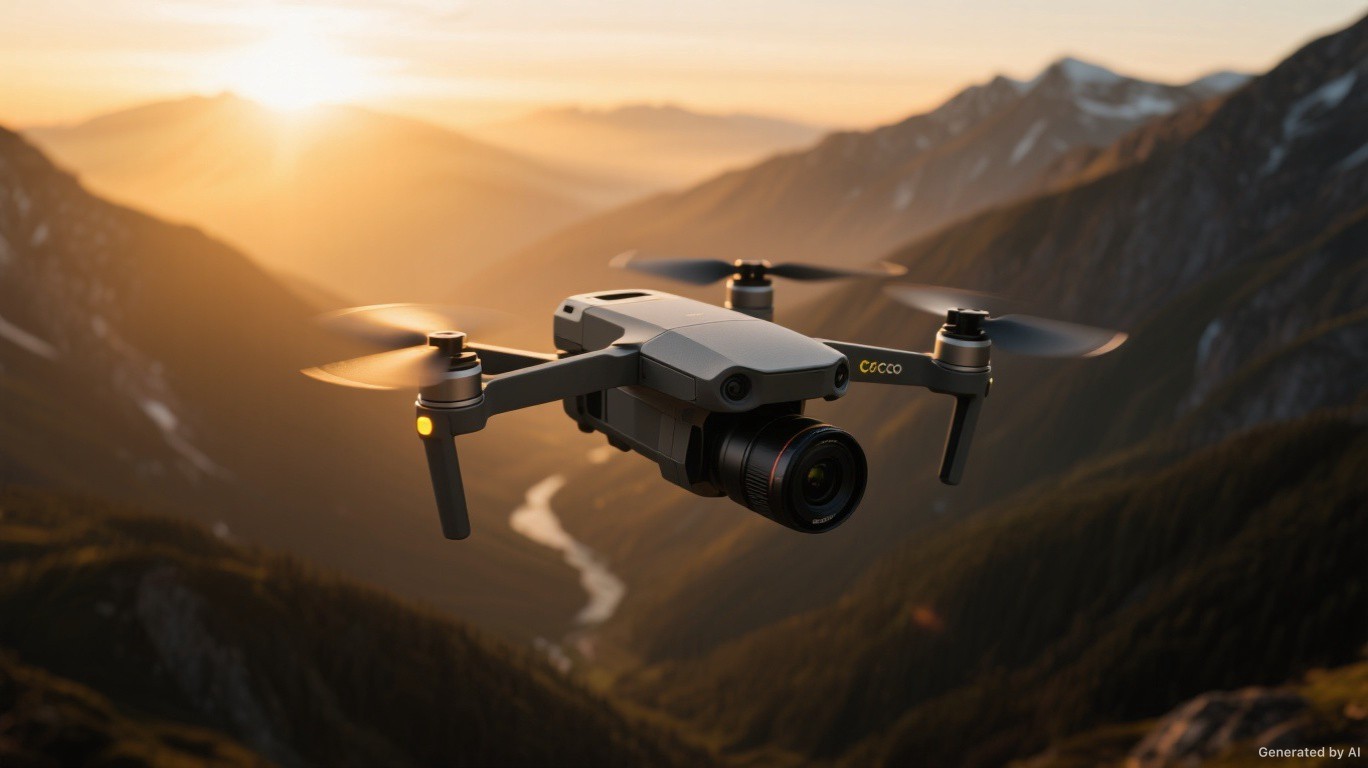
The Air series has always been DJI’s most sensible product line and its most frustrating. The Mini is the one you can legally fly almost anywhere; the Mavic is the one with the sensor that survives dusk. The Air 3S is the first model in the middle that stops hedging: a genuinely large sensor behind the wide lens, plus a second camera that is useful rather than decorative.
It is not the best drone DJI makes. It is the best drone most people should buy.
The verdict at a glance
| Rating | 4.5 / 5 |
| Best for | Travellers and hybrid shooters who want one drone that handles wide landscape and compressed detail shots |
| Price position | Roughly half a Mavic 4 Pro, comfortably above a Mini 4 Pro |
| Buy it if | You shoot at golden hour, need a second focal length, and fly in wind |
| Skip it if | You need sub-250 g legality, or a true professional codec pipeline |
The Air 3S is the most capable drone per gram in DJI’s lineup — with two honest caveats.
What the Air 3S actually is
DJI’s mid-tier body, upgraded where it matters. You get a folding airframe around 724 g, a one-inch 24 mm wide camera at f/1.8, and a 70 mm medium-tele using a smaller 1/1.3-inch sensor at f/2.8. Both record 4K with 10-bit D-Log M, and the obstacle-sensing package includes forward LiDAR rather than the vision-only setup on earlier Air models.
At 724 g the Air 3S lands in the C1 class under European rules, so it can be flown in the open category after an online competency test rather than a full certificate. It is still above 250 g, so it is not a drone you can treat casually. If legality is your primary filter, the Mini 4 Pro remains the rational choice; our guide to drone rules across regions explains the practical differences.
The one-inch sensor changes the low-light maths
Sensor size is usually described with unhelpful adjectives. The useful version: a one-inch sensor has roughly twice the light-collecting area of the 1/1.3-inch sensor in the Mini 4 Pro, and around four times the area of the 1/2-inch sensors in cheaper drones. With an f/1.8 aperture and dual native ISO, the wide camera has a working margin at blue hour that smaller drones do not.
In practice, that margin shows up as cleaner shadow detail at ISO 800 rather than as a magic ability to shoot at midnight. A one-inch sensor still produces visible luminance noise when you underexpose, and no amount of processing recovers highlights that were never captured. What it buys you is a usable ISO ceiling roughly two stops higher than a 1/1.3-inch camera of the same generation — the difference between a shot you keep and a shot you discard.
DJI’s 14-stop dynamic range claim is a controlled RAW-video figure, not a promise about a backlit sunset: expose for the sky and recover the shadows later. Our drone sensor sizes explainer covers the underlying maths without the marketing language.
The wide camera records 4K at up to 60 fps with HDR, and 4K at 120 fps for slow motion; the 120 fps mode crops slightly and drops HDR, as it does across this class. HDR is unavailable above 60 fps, so you choose between smooth motion and dynamic range before take-off.
The 70 mm camera is the reason to buy it, and the reason to hesitate
A third focal length is the single biggest creative upgrade in drone photography, bigger than any sensor improvement. At 24 mm everything is wide, and wide is where amateur aerial footage lives. A 70 mm equivalent lets you isolate a ridge, compress a coastline, or frame a subject without flying close enough to disturb it. For travel work, that alone justifies the price gap over a Mini.
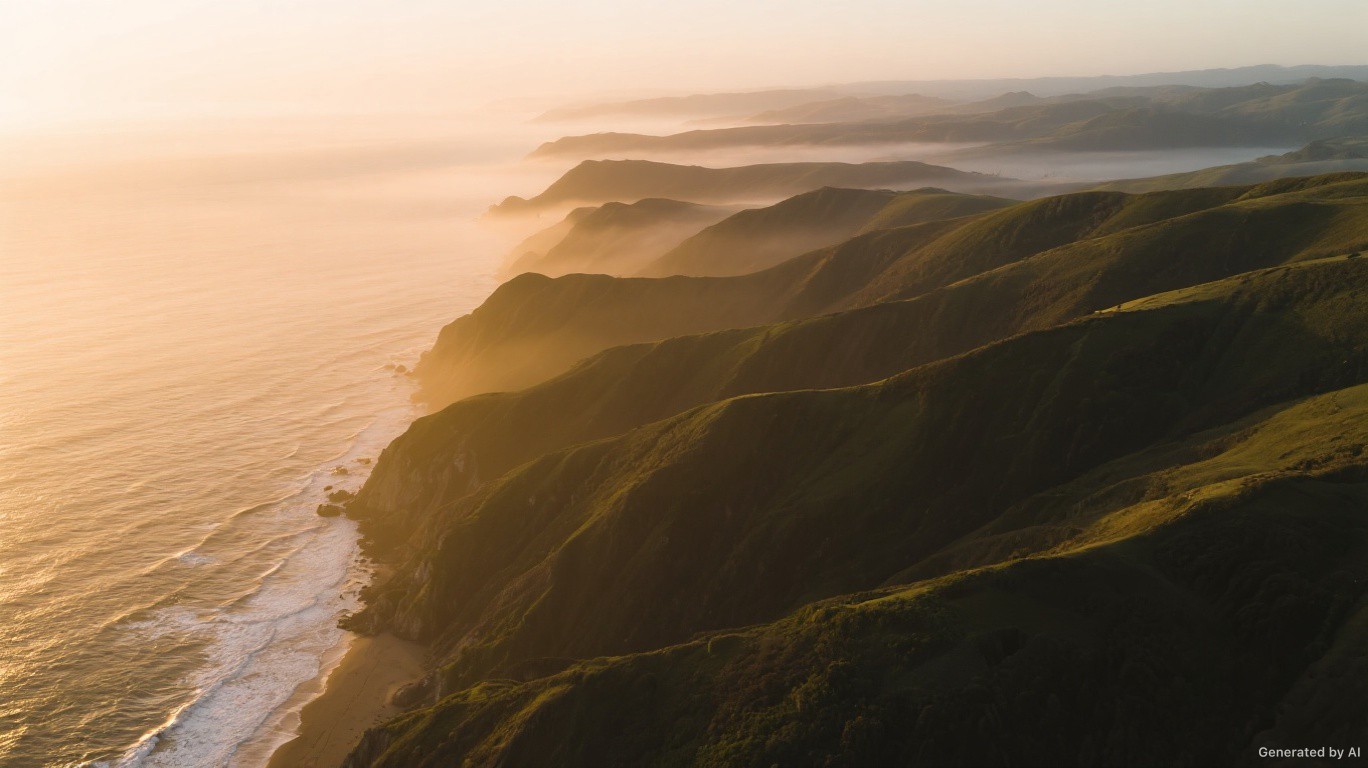
But the tele camera is not an equal partner. Its 1/1.3-inch sensor at f/2.8 gathers roughly two stops less light than the wide camera at f/1.8. That means it is excellent in daylight and marginal after sunset. It also cannot match the wide lens for dynamic range, and its minimum focus distance makes it a landscape and mid-shot tool rather than a macro lens.
This asymmetry is the most important thing to understand before buying. The Air 3S is not a drone with two one-inch cameras. It is a drone with one excellent low-light camera and one excellent daylight camera. If most of your flying happens in the hour after sunrise, that is a superb combination. If you shoot concerts, night cities or interiors, you will use the 70 mm far less than you expect.
Flying it: LiDAR, wind and realistic flight time
The headline flight time is 45 minutes. Real flights land closer to the mid-thirties in gusty coastal air, still comfortably more than the previous generation. More useful than the number is the behaviour: the Air 3S holds position in wind that visibly troubles a Mini, and the gimbal stays stable enough that 70 mm footage remains usable in gusts.
Forward LiDAR is the genuinely new capability. Its job is obstacle detection in low light, where vision-only systems lose confidence and either slow down or refuse to move. LiDAR keeps working when the scene is dark, which makes night flying less of a gamble — but it is not a licence to fly beyond visual line of sight, and it does not detect thin branches, cables or power lines reliably. Treat it as a safety net for the dark, not as autonomy. Paired with DJI Goggles 3, the same airframe also becomes an immersive framing tool.
Video, codecs and the workflow
The Air 3S records 10-bit D-Log M, which is enough to grade without the banding that 8-bit footage shows in gradients. It also has around 42 GB of internal storage, a feature that has saved more shoots than any codec specification: if you forget a card, you can still fly. Files can be offloaded over USB-C without removing the aircraft from its case.
Two workflow notes are worth flagging. First, D-Log M is not the same as the D-Log of DJI’s cinema line, and the included LUT gets you to a neutral starting point rather than a finished look. Second, 4K/120 files are large enough that a fast card and a fast reader matter; our SSD speed explainer covers what actually affects offload time. For a broader look at how codecs affect editing headroom, see camera codecs explained.
Where the Air 3S falls short
- No variable aperture. You cannot stop down to control shutter speed in bright light, so ND filters are mandatory for cinematic motion blur. The Fly More kit includes a set; the base kit does not.
- Two different sensors. The tele camera’s low-light deficit is real and cannot be fixed in post.
- No 5.4K or 6K option. 4K is enough for most delivery, but it leaves less room to reframe in post than the Mavic 4 Pro’s pipeline.
- HDR caps at 60 fps. Slow motion and HDR remain mutually exclusive.
They are the reasons the Mavic exists.
Air 3S vs the alternatives
| Drone | Sensor | Second camera | Weight | Why choose it |
|---|---|---|---|---|
| DJI Mini 4 Pro | 1/1.3-inch | None | 249 g | Legality and portability above all |
| DJI Air 3S | 1-inch | 70 mm, 1/1.3-inch | 724 g | Best balance of image quality and travel practicality |
| DJI Mavic 4 Pro | 4/3-inch | 70 mm + 168 mm | ~1 kg | Professional pipeline, variable aperture, triple camera |
The Mavic 4 Pro is the better drone and the worse value for most buyers. Our Air 3S vs Mavic 4 Pro head-to-head covers the same ground; the extra money buys a larger sensor and a longer lens, not a different class of footage in good light.
Who should buy the Air 3S
Buy it if you travel with a camera bag and shoot mostly in the first and last two hours of daylight. It is also the right upgrade for a Mini owner who has hit the sensor’s ceiling but cannot justify a Mavic.
Skip it if you fly under strict sub-250 g rules, shoot at night routinely, or need ProRes and a 4/3-inch sensor for client delivery. The Mini 4 Pro or the Mavic 4 Pro is the honest answer.
FAQ
Is the DJI Air 3S good in low light?
Yes, for a drone of this size. The one-inch sensor and f/1.8 lens give it roughly two stops more usable ISO than a 1/1.3-inch camera, which makes blue-hour footage viable. It is not a night-vision device, and the 70 mm camera is noticeably weaker after sunset.
Do I need the Fly More combo?
For most buyers, yes. The extra batteries, ND filters and bag are cheaper bundled than bought separately, and two batteries is the realistic minimum for a travel day.
Can you fly the Air 3S in Europe without a licence?
It falls into the C1 class, so it can be flown in the open category, but you still need to register as an operator and complete the relevant online competency test. National rules on distance from people and buildings vary.
Is the Air 3S worth it over the Air 3?
If low-light footage or the 70 mm lens matters to you, yes. If you fly in daylight and only use the wide camera, the older model remains capable and cheaper.
Does the 70 mm camera work at night?
Only marginally. Its smaller sensor and f/2.8 aperture cost about two stops relative to the wide camera.
Verdict
The Air 3S earns its place by refusing to be a compromise. It gives you the sensor that makes dusk shootable, a second focal length that changes how you compose, and flight behaviour that inspires confidence in real wind — all in a body that fits in a carry-on. The tele camera’s low-light limits and the lack of variable aperture are genuine omissions, but they are the correct economies at this price.
For travel, documentary work and the occasional paid shoot, this is the one to buy. If you need professional codecs or sub-250 g freedom, the lineup has better answers — just not better all-rounders.
Evidence note: specifications in this review are the manufacturer’s published figures. Statements about performance describe what the hardware implies in use and are labelled as assessment, not as laboratory measurement.